.avif)


.png)

We are all aware of the impact Artificial Intelligence (AI) is having on almost every industry these days. This includes the world of construction. From concept and design to construction management and project completion, AI is transforming the way contractors manage material ordering, workflow, and safety, making every project run more efficiently.
All stakeholders involved in a project are implementing AI technology trends in the construction industry to streamline operations, including architects, engineers, builders, and owners. Project managers find AI especially useful for scheduling and managing resources. This can be a tremendous time saver. In this article, we’ll explore how general contractors are using AI to improve efficiency.
What is AI in Construction
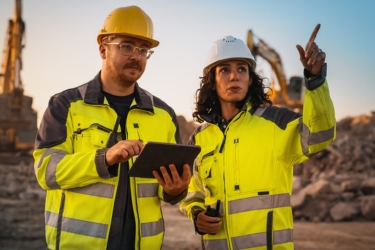
Artificial Intelligence in construction embraces a broad range of technologies. These include Computer Aided Design (CAD), Building Information Modeling (BIM), estimating and scheduling apps, robotics, security and safety surveillance equipment, drone recording, and more. Each of these tools has a specific purpose to help the job run smoothly from start to finish.
There are many benefits of using AI tools in construction. Most importantly, contractors use AI to improve project efficiency by taking over time-consuming activities. In 2026, AI is assisting humans in completing tasks proficiently and safely. It is important to point out that AI hasn’t replaced people in the construction industry. It has simply assisted with and enhanced the progress of daily operations on a job site.
Here are 10 ways AI can assist contractors across all aspects of construction.
10 Examples of How General Contractors are Using AI to Improve Efficiency
1. AI in Design and Planning Stages
AI has been used by architects, engineers, and construction professionals in the design and planning phases of projects for decades. Advanced tools have streamlined the entire process and enhanced decision-making from project inception.
The most notable advancements are the integration of Computer Aided Design (CAD) and implementing Building Information Modeling software solutions (BIM) software solutions. BIM allows designers to generate 3D models that incorporate architectural and engineering drawings and enable accurate material takeoffs. This directly results in time and cost savings.
AI-generated drawings and models play an important role in quality control during the design and planning phases. BIM programs can analyze designs and detect potential errors or omissions, allowing adjustments to be made before construction begins. This tool may reduce costly mistakes and accelerate project timelines.
2. Preparing Competitive Bids
Preparing project bids used to be an arduous task before the advent of AI. Project estimating entails obtaining material prices from vendors, securing subcontractor bids, and calculating labor costs.
AI tools and software programs, including BIM, help general contractors analyze project scope and develop strategies for profitable outcomes by generating accurate, competitive bids. This often leads to successfully winning a project contract.
This data-driven approach enables smarter negotiations, ensuring that contractors and suppliers are selected based on both cost-effectiveness and quality. It makes good sense that contractors use AI for estimating projects in today’s automated environment.
3. Accurate and Accessible Construction Documents
Working with paper documents, such as drawings, specifications, and permits, can be burdensome. Not to mention printing costs and the physical storage space needed for these items. AI-powered tools, such as building information modeling automation, allow contractors and other team members to extract accurate information that is stored on a shared cloud platform. This saves both time and energy.
This form of algorithmic resource allocation uses automated rules to distribute information and resources more efficiently and sustainably. AI algorithms analyze construction documents to identify data points, key terms, and clauses, and data that makes it easier to review code compliance and contract details. Inconsistencies can be flagged to mitigate risks.
4. Improved Collaboration and Timely Communication
There are times when physical site meetings may not be practical for all team players. AI-powered tools enable teams to communicate and collaborate in real time, regardless of where they are. This is achieved through virtual and augmented reality mechanisms. This is especially beneficial for large-scale projects where owners/clients are located in different parts of the country or world.
AI-powered communication tools promote and enable connectivity. These tools can also record meeting notes, translate documents and conversations, and overcome language barriers to ensure clarity. This is a great example of how general contractors are using AI to improve efficiency. Timely and accurate communication is essential for keeping a construction project moving.
5. Cost Control

Using AI to better plan a project can effectively shorten timelines and reduce labor costs.
Some tools analyze data from prior projects, such as materials usage, supply chain patterns, and labor activities. This helps optimize resource allocation and streamline worker productivity. With predictive analytics, you’ll find you have less material waste from overordering, fewer delays in supply deliveries, and reduced labor costs from workforce overlaps on the job site.
AI-generated automated scheduling and resource allocation will keep your project on schedule while keeping the budget on track.
6. Better Project Management
Advanced AI tools for construction project management, such as BIM, 3D modeling, and computer vision for site monitoring, allow general contractors to track progress and productivity in real time. In addition, AI tools make it easier for administrative staff members to keep close tabs on the budget, including tracking invoicing, payments received, and outflows. As well, cloud-based AI-driven collaboration platforms streamline operations by centralizing construction documents, schedules, and meeting transcripts.
These automated applications allow you to optimize the allocation of materials, equipment, and labor, ensuring job site resources are used as efficiently as possible throughout the project.
7. Improved Job Site Productivity
There are several ways AI can help general contractors and project managers save time by increasing job site productivity. Using AI applications to schedule primary crews and subcontractors efficiently is sure to have a positive impact on your labor outcomes in terms of time and cost. A well-engineered schedule is key to ensuring there aren’t too many overlaps among crews, which can cause bottlenecks, downtime for some workers, and possible delays for others.
This also offers the opportunity to schedule resource deliveries with vendors to ensure supplies are on-site before a particular crew begins their dedicated work. A proper schedule or timeline is an excellent resource for you to share with your suppliers so they can procure materials well in advance.
As mentioned previously, another AI tool that increases productivity is computer vision site monitoring. By monitoring construction progress, you will gain vital insights to make informed decisions quickly. Basically, site vision monitoring enables computers to extract numerical data from digital images, videos, and 3D point clouds. The information is processed and made available to managers so they can evaluate progress and, if necessary, pivot to improve workplace efficiency.
8. Enhanced Safety and Risk Mitigation
Job site safety is of primary concern for all general contractors. AI technologies, such as security cameras and surveillance drones, can monitor and record worksite activity. This includes labor activities and any illicit after-hours activities, such as break-ins.
Real-time job-site visual monitoring protects workers by reducing the risk of accidents caused by improper safety practices or by workers not following mandatory OSHA standards. This minimizes injuries that can result in time losses or medical and workers’ compensation claims.
AI algorithms analyze video footage and sensor data to detect signs of site instability, mechanical issues, or unsafe machinery. This tool alerts contractors to unsafe conditions so that corrective measures are implemented expeditiously.
AI solutions use machine learning algorithms to monitor job sites and automatically assign priority to potential issues based on their severity. For instance, if a subcontractor is rated using risk scores, construction managers can focus their efforts on higher-risk teams and mitigate problems before they escalate. Overall risks related to the quality of workmanship are mitigated through automated AI video inspections of sites and analysis of 3D models. This enables the timely detection of defects or deviations from plans.
9. Embracing Robotics in Construction
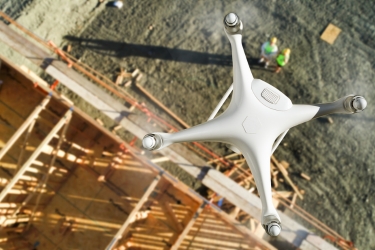
Robots used in construction combine artificial intelligence with technologically engineered and fabricated machinery to perform building tasks, often with more precision and speed than humans. Robots are equipped with sensors and machine learning algorithms. This enables them to accurately analyze and assess specific areas of the construction site and respond accordingly. Types of robots include drones, rovers, self-driving trucks, autonomous excavators, remotely operated lifts, paint applicators, and more.
Drones are used to conduct aerial surveys of job sites and compare the data with construction drawings in real time. This capability helps identify discrepancies, deficiencies, or obstructions, enabling project teams to make necessary adjustments without delaying construction progress.
AI automation is already being used extensively in 3D printing applications. 3D printers can construct scaled models of an entire construction site and its proposed improvements. Printers can also fabricate building materials, including composite or synthetic bricks and blocks. This is a tremendous time saver for the manufacturing sector of the construction industry.
Robots are not intended to replace the workforce. Rather, they are used to complement the construction crew by assisting with difficult or heavy lifting tasks and by providing analysis of the surroundings for safety and to reduce human error. Keep in mind that robots don’t succumb to fatigue the way a workforce does, making them very efficient while working longer hours.
10. Monitoring Sustainability Practices
In an effort to help contractors reduce their carbon footprint and overall environmental impact, AI is an essential tool. AI is used to monitor energy consumption, material waste, water consumption, and emissions, enabling companies to identify areas for improvement.
AI-generated predictive analysis can forecast the environmental impact of different construction methods. This allows companies to select greener alternatives that align with their sustainability goals.
Conclusion
From the design process through project completion and further into building maintenance and monitoring, AI tools are improving contractor productivity. AI is transforming the way contractors communicate with the entire project team, manage material ordering, monitor workflow progress, and implement safety protocols more effectively, making every project run more efficiently. More and more contractors are embracing AI tools, such as BIM, estimating and scheduling software, drone surveillance, 3D printing, and automated equipment. AI in construction is no longer the future; it is already here. This article is a comprehensive overview of how general contractors are using AI to improve efficiency.
When you are planning your next construction project in the San Gabriel area of Los Angeles County, be sure to reach out to Arcadia Sash and Door Inc. We invite you to browse our professional-grade window and door systems. Be sure to reach out to get a free quote for commercial window and door installations. We pride ourselves on quality craftsmanship and the superior products to ensure the best project outcome. We are a family-owned business with decades of experience providing the most excellent window and door products the industry has to offer. Contractors who choose to partner with us benefit from the confidence that comes with excellent products and services across every project. We are available to answer any questions you might have about our window and door products. Contact us at your earliest convenience to learn more.