.avif)


.png)
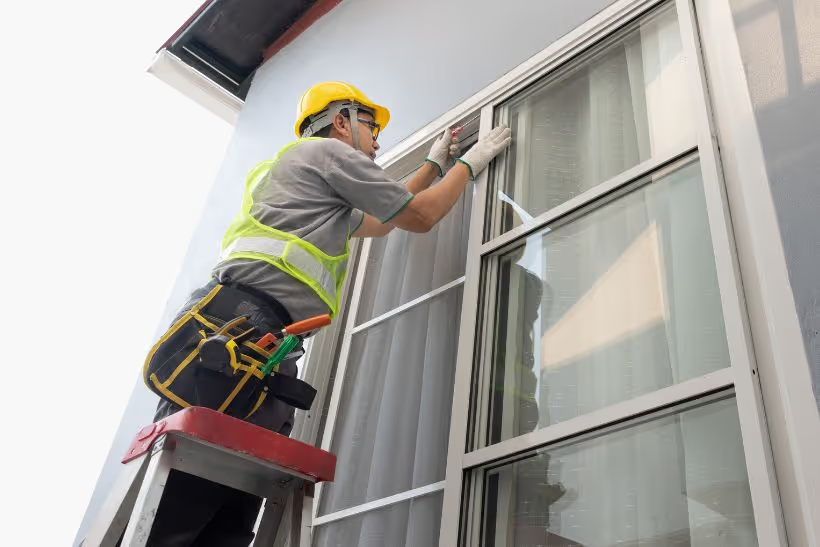
Workplace safety must be a priority for general contractors. Protection for your employees and yourself doesn’t start and end with Worker’s Compensation Insurance. It extends to job site conditions and general health, safety, and welfare practices. Providing a safe work environment is also important for non-employees, such as subcontractors, design professionals, clients, inspectors, and the general public. In this article, we’ll explore 7 construction site safety protocols for general contractors to prevent accidents and injuries. You can use this as a guide for meeting current workplace safety standards.
1. Familiarize Your Team with OSHA Regulations

There are standards and regulations already in place for job site safety. These are administered by the Occupational Safety and Health Administration, commonly called OSHA. This government regulatory body prepares and enforces safety guidelines for construction site operations and conditions. The OSHA 1926 regulations are the gold standard for workers' health, safety, and welfare. OSHA 1926 is issued by the Secretary of Labor, the governing body to which OSHA reports.
Construction managers must be familiar with OSHA’s workplace safety regulations for every project. There are courses offered nationwide, including the Los Angeles County area, that general contractors, project managers, and skilled laborers can participate in. Ongoing safety training is highly recommended for all working in the construction industry. While on the topic of education, basic life safety and CPR courses are also encouraged.
OSHA regulations cover various job site topics, including fall protection, protective gear (PPE), and heavy machinery operator certifications. The rules should be made available to every employee, and periodically reviewed with your entire team.
It is also a good idea to allow OSHA inspectors access to your job sites at any time to ensure that your crew is diligent about enforcing safety policies and procedures. OSHA inspectors will note areas of compliance with the standards, cite safety violations, and prepare detailed inspection reports for you to take corrective actions. Trained inspectors play an important role in promoting safe working conditions and the prevention of workplace-related accidents and injuries.
2. Provide Personal Protective Equipment
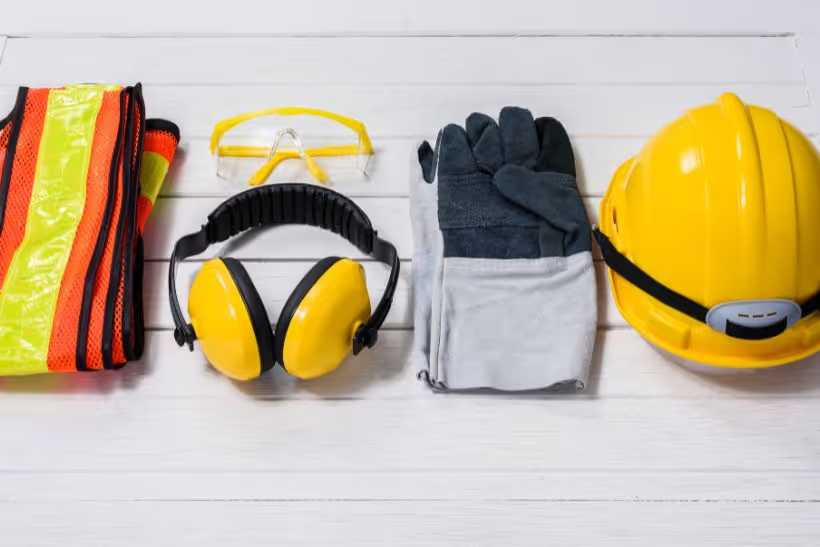
Wearing of Personal Protective Equipment (PPE) is mandated for specific tasks and for those visiting a construction site. PPE protects from injuries due to falling objects, loud noises, and exposure to irritants, to name a few. This type of equipment includes
- Hard hats
- Safety goggles
- Noise-canceling headphones
- Steel-toed boots
- Heavy gloves
- Respirator masks
- Hazmat suits
- Fluorescent safety vests
It is important to note that many PPE items come with expiration dates. For instance, high-quality hard hats sometimes have a date stamped on the inside of the helmet that indicates when the plastic will deteriorate due to sun exposure, and the suspension components will lose rigidity or shape. PPE is subject to wear and tear and can succumb to damage. It is a good practice for project managers and job foremen to inspect workers’ PPE occasionally. Outdated and degraded equipment will have to be replaced.
3. Provide and Install Fall Protection
Falls are common on construction sites and can result in serious injuries. They can occur from many elevated areas on the site, including roofs, scaffolds, lifts, and ladders. With proper equipment and preventive practices, falls can be reduced or avoided altogether. Here are some examples of construction site safety protocols for general contractors to prevent accidents and injuries from falls.
Roofs are particularly tricky surfaces to move about on safely. They are areas exposed to weather conditions, such as wind, rain, snow, and ice. To prevent falls from pitched roofs, workers need to have the proper footwear and toe boards to prevent slips. OSHA recommends that roofers working on steep-sloped roofs use Personal Fall Arrest Systems (PFAS). These are whole torso and leg harnesses connected to anchors secured to the roof ridge. On flat roofs without parapets, temporary guardrails can be installed at the perimeter.
Scaffolds, whether stationary or swing-style, should have protective rails and netting. The netting is excellent for catching smaller items, like tools and debris, so they don’t fall to the ground and potentially injure someone below. In both cases, harnesses and hard hats are recommended and even mandated.
Lifts, including booms, buckets, cherry pickers, and scissors, can be dangerous due to human error. The lift operator must be trained and certified to operate the machinery safely. These machines rely on motors or engines to maneuver and locking mechanisms to stabilize them. The person being lifted must wear a harness and a hard hat.
Ladders have shoe feet that anchor them securely to the ground they sit on. Extension ladders also have ropes with pulleys and rung locks. A worker should never step onto a ladder that isn’t secured and locked into position.
OSHA requires safety nets when constructing multi-story buildings where workers are exposed to vertical drops. The nets must be placed at intervals of 10 to 30, and no more. These can be installed on open framing components before floors are placed. They are often seen at the outer perimeter of a building skeleton before exterior walls and fenestration are placed.
4. Maintain a Clear and Secure Worksite
Maintaining a clear, clean, and secure worksite is critical for reducing the risk of injuries. This is true for your workforce as well as those visiting the site. Strategically placed dumpsters that are routinely emptied are essential for keeping a clutter-free site.
Periodic cleaning and decluttering prevent even minor accidents, such as tripping over an electrical cord. Educating your crew on the importance of keeping clear floor space and moving tools that are not in use out of the way is the first step to decreasing workplace injuries. As well, implementing a regular cleaning schedule will reduce long-term damage to lungs from inhaling irritants like sawdust and wallboard compound sanding debris. Those assigned to cleaning the job site should wear PPE.
Securing your construction site throughout the project is paramount to protecting your assets and keeping your team and the public safe. Perimeter fencing is advisable for larger projects to keep people out of the site during and after working hours. Power tools and building materials are best stored in lockable trailers at the start of construction before the building is enclosed. Heavy machinery should be locked and keys removed when not in use.
For smaller residential projects, lockable windows and doors are good deterrents from theft and can protect materials and equipment from the elements. Instead of covering openings with unsightly plywood in a nice residential area, you and your client can choose from various window frame trends for contractors that will enhance the appearance of the house exterior during construction.
5. Train and Certify Staff on Proper Handling of Tools and Machinery

Watching news footage of a tall crane swaying out of control on a construction job site is stressful. This type of mishap generally does not have a positive outcome. Improperly handled heavy machinery and power tools are common causes of worksite accidents for the crew and the general public. Power tools and heavy machines are subject to wear and deterioration. This equipment needs to be maintained, just like you would take care of your car. Routine inspections and service must be scheduled to prevent malfunctions and breakdowns.
Handlers of power tools require training in their proper use and best safety practices. Most of these tools have safety locks and guards for protection. Likewise, when using power tools, personnel must wear protective gear. For instance, a carpenter using a hand-held rotary saw will want to place the guard in a position that shields the turning blade from both the eyes and hands. The operator might wear heavy gloves and safety goggles for added protection.
Operators of specialty heavy machinery can’t get behind the wheel or controls without extensive training, certification, and even a license. These skilled workers may be subcontractors who own their equipment. In that case, he or she will have to carry the appropriate insurance policies. This equipment requires acute mental focus and physical dexterity to operate safely. Ongoing training and recertification are often mandatory for specific machines. It is in your company’s best interest to invest in such training programs if your employees operate heavy machinery that you own to prevent accidents.
6. Provide Basic Amenities and Necessities
While you are not running a resort for your employees, you want them to be comfortable and healthy. Taking care of your workforce will pay off in higher productivity and improved morale. It will also reduce the risk of mistakes leading to injuries. Follow these additional suggestions for construction site safety protocols for general contractors to prevent accidents and injuries on your job sites.
Mandatory Breaks
An exhausted laborer cannot function efficiently and is more prone to injury. Workers are entitled to breaks, generally three per shift: a mid-morning break, a lunch break, and a mid-afternoon break. In addition, laborers should not be expected to work double shifts. Construction work is physically challenging; breaks are necessary for muscle recovery and mental resets. As with essential breaks, sick days, and vacation time should be honored.
Have Plenty of Water on Site
It is no secret that the Los Angeles area experiences dry and warm weather, especially in the heat of summer. While the abundant sunshine is uplifting, it can present issues for those working outside. Excessive perspiration on a hot day can lead to headaches, dizziness, rapid heartbeats, and eventually heat stroke. This is a dangerous condition that usually requires medical attention.
I can’t stress enough the importance of remaining hydrated throughout the day. Relying on your team members to show up for work with abundant water or electrolyte-refilling drinks isn’t realistic. You can place portable water coolers, also called sports coolers, at strategic locations around the construction site for workers to refill water bottles. Make sure the coolers are cleaned often and refilled with fresh water daily.
If you are a generous boss, fill some coolers with ice and energy or sports drinks with essential electrolytes. It is also a good practice to connect with a local food truck that offers prepared foods for purchase at a reasonable rate. Please plan to have them stop by the site at least once daily.
Provide Clean Sanitary Facilities
Portable sanitary facilities are a must on every job site. Rent them from a reputable company that will empty and clean them at least weekly. You also want each unit restocked with toilet tissue and hand sanitizer. We have all been subjected to the discomfort of a dirty porta-potty that smells awful and has no TP at least once in our lives, probably several times. Unsanitary facilities can expose your employees to bacteria and communicable diseases. That is considered an unsafe job site condition.
Have a First Aid Kit on Hand
A well-stocked first aid kit is one of the most essential items to have at a construction site. Construction accidents can be severe, so a good first aid kit needs items to stabilize the injured party until EMTs arrive. In addition to first aid basic supplies, other items to include are:
- Bandages and gauze
- Burn dressings
- CPR masks
- Eyewash and protection pads
- Medical PPE
- Stabilizing splints
- Sterilizing wipes
- Tourniquets
- Instruction manual
OSHA calls for Class B/Type IV combination kits for job sites where injury risks are higher and less predictable. With these kits, you should train your foremen, supervisors, and several workers to properly use a first aid kit. And, make sure it is accessible and not in a locked field office. Some kits can be contained in accessible housings secured to the exterior wall of a field office for visibility and easy access.

7. Inspect and Report
Empower your supervisors, construction managers, and workforce to observe site conditions and potential safety hazards. Everyone should feel that they are participating in an environment that supports a culture of safe reporting when a dangerous situation feels apparent. No one should feel intimidated when reporting a potential or evident safety issue.
Some construction companies allow employees to file anonymous reports through a suggestion drop-box. Others have weekly meetings where open and fully transparent discussions can be held without fear of retribution.
Another way to address construction job site safety issues is to use an independent third party to visit the site periodically to inspect conditions and prepare a report of findings detailing areas that comply and those that could use improvement. This method will cost you, but it takes the pressure off your workforce.
In Summary
Providing a safe and secure work environment for your construction team is essential and mandated by the Occupational Safety and Health Administration. Safety protocols not only prevent injuries and accidents but also protect you, the business owner, from potential liability issues. Safety applications range from supplying Personal Protection Equipment to offering advanced training in best workplace practices and life safety.
Securing your worksite is as important as basic safety. When you need to protect your tools, materials, and work progress, call Arcadia Sash and Door Inc. for window and entry door installation services.