.avif)


.png)

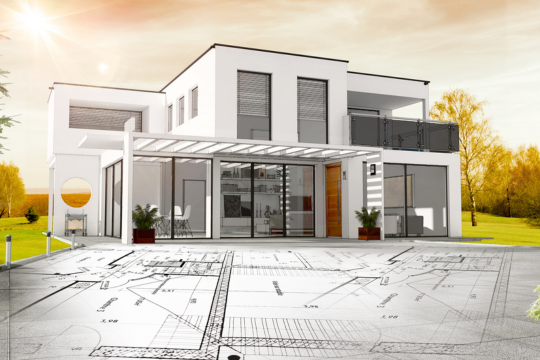
Building Information Modeling (BIM) is an advanced digitally produced 3D representation, or model, of a physical asset. This is a standard CAD drafting tool used by architects and engineers to create drawings of buildings with embedded valuable information for design, construction operations, and facilities management. This information enables the entire project team to communicate effectively with one another and to track construction costs accurately.
BIM is beneficial for general contractors to manage projects before and throughout the entire construction phase. This tool enables you to track material costs, scheduling, construction delays, and miscommunications with designers and building owners. BIM in construction enhances the efficiency of the building process by providing accurate data for the entire team to share from preliminary design through construction and into maintenance of the built environment.
In this article, we discuss the basics of BIM modeling for use in construction, who uses the platform, and the benefits of BIM for general contractors. We also address the question of whether your company could benefit from BIM.
How BIM is Used in the Construction Industry

BIM goes far beyond traditional 2D and 3D CAD (Computer-Aided Design) drafting systems. This holistic drawing process enables the creation of intelligent construction documents, integrated with a cloud-based data bank containing vital information about the entire building or infrastructure. This digital data includes things like:
- 2D and 3D geometric representations (plans, elevations, details, etc.)
- Product specifications
- Material quantity take-offs
- Code compliance
- Sustainability information and energy analysis
- Scheduling and sequencing
- Post-construction maintenance
Having all this information in one place offers a centralized repository where all project team members can access essential details and update them in real-time. The term for this platform is Common Data Environment (CDE). Team members who have access to the CDE include builders, architects, engineers, facilities managers, and owners.
A simple example of how BIM in construction works is the ability to access materials information for preparing a cost estimate. Let’s say you need to know how many energy-efficient doors and windows are depicted on the CAD drawings. The BIM model can provide a count of all the different doors and windows, along with their dimensions. You can easily use this information to obtain quotes from suppliers for preparing your bid for construction. You would do this for every building component depicted in the drawings.
Another way builders can utilize the data contained in a BIM drawing and specifications package is to generate a visual and printable project schedule timeline that all parties have access to throughout the project. The information contained in the 3D geometric model of a building is extremely helpful in project sequencing and timing. The project scheduling and sequencing tool in BIM is referred to as 4D BIM, which is particularly effective in identifying scheduling conflicts and overlaps early on.
Who Uses BIM for Construction?
BIM isn’t only beneficial for general contractors to use in construction. The implementation of a BIM model begins at project inception and continues through the facilities management stage. It is essential for you to understand who the key players are in construction projects and BIM, and how each utilizes the system to achieve the best outcome.
Architects and Designers
The BIM model allows architects and designers the freedom to be creative in the earliest stages of the project, while keeping them on track with factors such as site variations, budget constraints, and code compliance. Designs can be modified easily using 2D and 3D drafting tools, as well as the continuously stored building data. Architects can produce realistic renderings using CAD features.
Engineers
Once the basic design is approved, structural and mechanical engineers can work with the architect to integrate structural components, as well as HVAC, plumbing, and electrical systems. Using 3D spatial technology, engineers from all disciplines are better equipped to perform structural load calculations, as well as mechanical systems load calculations. Necessary changes to the design to accommodate engineering systems can be worked on by all parties through the BIM platform and associated CDE.
General Contractors and Project Managers
Prior to beginning the actual construction, general contractors and their project managers can access building data for accurate quantity take-offs and the preparation of more precise bids. Project managers utilize BIM to coordinate with a variety of subcontractors and employees, ensuring proper scheduling without overlap of different trades during construction.
Project Owners
Project owners appreciate BIM for its transparency and clarity. They have stakeholder contact information at their fingertips and can closely follow the work progress. This ultimately reduces the risk of budget overruns because the client can track how their money is being allocated.
Facilities Managers
When using BIM for a building project, the stored information is constantly updated to reflect changes and actual conditions. Pretty much everything is recorded. This is excellent for facility managers who take over the care and maintenance of the building after construction is completed. There is updated, digitally stored data in the form of drawings, specifications, and key contact information.

Benefits of Using BIM Software in Construction
BIM is rapidly growing as a crucial aspect of the construction industry. It is used for project planning, design, construction, and management of a facility. Valuable information about all phases of a construction project is enabled and made available through BIM. This includes geometric graphics (CAD drawings), 3D spatial relationships, 4D scheduling, and 5D cost estimating. This centrally located database has several advantages over other platforms commonly used in the construction process.
Better Communication
Effective communication between all stakeholders is crucial for the smooth evolution and completion of a construction project. Using BIM throughout all phases of construction fosters collaborative working relationships and a solid communication platform, ensuring that all parties are up to speed and on the same page. This eliminates the silo effect by promoting teamwork and transparency. Working independently and miscommunication result in errors and delays.
Clash Detection
Even before construction begins, BIM is able to identify clashes between all the disciplines involved in designing the building. Architects and engineers can identify and rectify any design discrepancies that would make the installation of structural and mechanical systems more difficult and costly for both the builder and the client. Clashes identified before construction will save the general contractor time and money.
Accurate Bid Preparation
BIM-generated drawings and specifications enable estimators and contractors to prepare bids for construction with greater precision. In many cases, the RFP (Request for Proposals) will include a link to the BIM (Building Information Modeling) package. This package will consist of IFC standards to make the data consistent and accessible to all parties, including builders. With this tool, it is easier to perform quantity take-offs, ensuring accurate pricing of materials and other building components. This helps you to be more competitive.
Improved Project Efficiency
With BIM, many repetitive tasks are automated, which improves coordination and reduces time spent on each aspect of the project. Choices are made expeditiously, and errors are flagged quickly. This streamlines the workflow and aids in timely project completion.
Fewer Change Orders
With enhanced collaboration and early clash detection, change orders during construction can be significantly reduced. You will still need to process some change orders due to unforeseen site conditions or unavailability of materials. BIM’s detailed 3D visualization and data integration offer an opportunity for project team members to align from project inception, addressing all concerns and decreasing uncertainty. This dialogue between team members reduces the need for multiple change orders during the construction process.
Cost Control
A primary advantage of using BIM in construction is the ability to provide detailed information about every component of the project, from quantity take-offs (QTO) to labor estimations. Accessing accurate data reduces the risks of budget overruns and costly delays due to labor shortages or scheduling conflicts.
Enhanced Sustainability
With numerous projects embracing sustainability goals, such as LEED certification, WELL Building Standard, and Living Building Challenge Certification, BIM contributes to more comprehensive green building documentation. The BIM model enables energy analysis, materials optimization, and waste reduction. The data available on a BIM platform enables better decision-making regarding energy efficiency and the environmental impact of buildings.
Easier Scheduling and Project Management
Contractors can clearly visualize the entire construction process using BIM. Once a sequencing schedule is mapped out, it is much easier to see potential problems that could lead to work delays and even work stoppages. You can build in adequate time and implement corrective measures should materials become unavailable, weather impedes progress, or any other factor that throws the schedule off track.
Reduced Liability and Risk
General contractors have deep pockets with the General Liability and Workers’ Compensation insurance policy you are required to carry. Premiums are expensive, and payouts can be significant when something goes terribly wrong or someone gets injured on the job site. BIM helps to identify and correct potential risks and safety hazards early on before they become costly problems.
Quality As-Built Document Preparation
With BIM, the days of redlining field drawings to reflect changes and as-built conditions are gone. You can access designated drawings and specifications on the shared platform, where you can record changes from the initial design to reflect actual conditions. You also have approved change orders right there that everyone can refer to. This capability is essential for project owners and facility managers long after construction is completed.
Is BIM Right for Your Company?
You might be wondering if BIM is a good fit for your business, especially if you are a small contracting company that takes on moderately sized projects and has no CAD training. Keeping up with technology, such as BIM, can be challenging for smaller firms with limited office staff.
The truth is that BIM is a valuable tool for both large-scale and smaller projects. Many architects and design-build firms are utilizing BIM for its 3D visualization capabilities, accuracy, and time-saving qualities. If you don’t already have BIM, you might still find yourself bidding on projects that were BIM-generated. In that case, it would be worth the investment to either take a training course or hire a recent graduate who is tech-savvy and knowledgeable about BIM. This way, you won’t be missing out on project opportunities that have integrated BIM technology.
To be clear, you can still bid on projects that use BIM without having the capability of using the CDE interface software. In many cases, not all members of a project team will be familiar with BIM. In fact, it is estimated that only 55% of AEC firms and builders are using BIM. But that is about to change with BIM and CDE software becoming an industry standard for AEC professionals, general contractors, and building owners.
You must weigh the expense of BIM software and training against the potential cost savings in project efficiency and risk reduction. If you intend to remain competitive in today’s construction industry environment, BIM is something that should be on your radar. Now is a good time to budget for this advanced technology going forward. Just like AI, BIM is not going away any time soon.

To Sum It Up
The use of BIM is gaining popularity and establishing an impressive foothold in the construction industry. It offers numerous benefits that improve communication, reduce costs, and streamline the entire construction process from design to project completion. This is achieved through a shared platform that stores data from drawings and specifications to building components, contact information, and much more. The entire team has access to up-to-date, real-time information, which enables informed decision-making and healthier project outcomes.
BIM provides an all-inclusive view of a project from the design phase through construction and into post-construction facility management. BIM’s role in construction is only growing stronger and will continue to expand as more builders embrace and utilize all that the technology has to offer.
High Quality Building Solutions in San Gabriel Valley
Utilizing BIM in your construction projects can be a vital time-saver and reduce cost overruns and risks. This advanced tool is soon to become as important for builders as collaborating with the best suppliers of building materials in the industry.
Whether you are specifying energy-efficient windows or finalizing your door hardware selection, working with the company that offers superior craftsmanship and quality products is essential for the best outcome. Arcadia Sash and Door Inc. is a Los Angeles County area family-owned business with decades of experience providing the best products the industry has to offer. Contractors who partner with us enjoy the confidence of consistently high quality and workmanship across every project. Contact us at your earliest convenience to discover what we have to offer.