.avif)


.png)
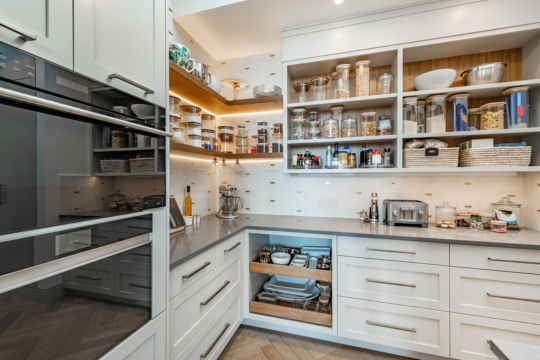
If you’ve ever stood in front of your pantry wondering why you own three half-empty bags of flour, you aren’t alone. Small pantries fill up fast, and once they do, finding anything feels like a scavenger hunt.
The good news is that learning how to organize a small kitchen pantry efficiently doesn’t require a full renovation or a Pinterest-worthy budget. It just takes a plan, a few smart products, and about an afternoon of your time.
Whether your pantry is a narrow closet, a single cabinet, or a shallow set of shelves next to the fridge, the same principles apply. You’re working with limited square footage, so every inch needs to earn its keep.
Below, you’ll find a room-by-room approach to clearing the clutter, creating zones, and setting up systems that actually stick.
Start by Emptying Everything Out
Before you buy a single container, take everything out of your pantry. This step feels tedious, but it’s the only way to see what you are truly working with. Lay items out on your counter or kitchen table, grouped loosely by type: baking supplies, canned goods, snacks, spices, etc.
While you’re at it, check expiration dates. Most pantries hide at least a few forgotten items that expired months ago. Toss out anything expired, and set aside items you know you’ll never use. This is also a great moment to consider broader home decluttering tips, especially since a cluttered pantry is often a sign of clutter creeping in elsewhere in the kitchen.
Once your shelves are bare, wipe them down. Crumbs, spills, and dust build up over time, focusing on the back corners you rarely see. Use a mild cleaner and a dry cloth, and make sure shelves are completely dry before anything goes back. A clean, empty pantry gives you a fresh canvas and makes the next steps far more satisfying. It also gives you a chance to spot small issues like loose shelf brackets or peeling shelf liner before you start filling things back in.
Measure Your Space Before You Shop

While it’s tempting to head straight to the store and grab whatever bins look nice, measuring first will save you money and frustration. Grab a tape measure and note the height, width, and depth of each shelf. Pay close attention to shallow pantry shelves. It’s not uncommon for these to limit which container sizes will actually fit.
If your pantry has a mix of tall and short shelves, jot that down as well. Knowing your exact dimensions means you’ll not end up back at the store returning bins that don’t fit, or worse, cramming oversized containers into a space that was never meant to hold them.
Sort Items Into Pantry Zones
One of the most effective strategies for organizing a small kitchen pantry is to create pantry zones. Instead of grouping items randomly, assign each food category its own dedicated area. A simple zone system might look like this:
- Baking zone houses flour, sugar, baking soda, and extracts
- Breakfast zone houses cereal, oatmeal, and pancake mix
- Snack zone houses crackers, chips, and granola bars
- Canned goods zone houses soups, beans, and vegetables
- The grab-and-go zone is for kids' lunches or quick snacks, near eye level
Zones work because they train your brain and your family's brains to put things back in the same place every time. Once everyone in the house knows where the snack zone lives, your pantry stays organized with far less daily effort on your part.
Use Vertical Storage to Your Advantage
Small pantries rarely lack height. Vertical pantry storage hacks can double your usable space without adding a single inch of square footage. Shelf risers are among the easiest upgrades here, letting you stack canned goods or spice jars in two tiers instead of a single flat row.
If your pantry has tall, awkward gaps between shelves, consider adding stackable wire baskets. These let you use the airspace above shorter items like sauce jars or snack bags, rather than leaving it empty. For pantries with a single tall shelf, a Lazy Susan is a great way to use the shelf's depth without items getting lost or forgotten in the back.
Door space is another underused resource. Door organizers, especially those designed to hold spice jars or small condiment bottles, can free up an impressive amount of shelf space. A door-mounted spice rack alone can clear off an entire shelf that would otherwise be dedicated to spices rolling around loosely.
Choose Containers That Actually Fit Your Shelves
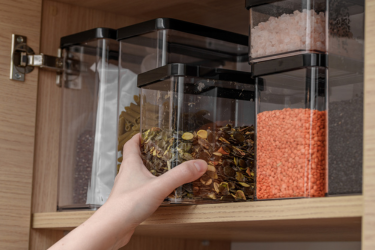
Once you know your measurements and zones, it’s time to think about containers. Clear storage containers are a pantry organizer's best friend. When you can see exactly what’s inside a container and how much is left, you waste less food and shop more efficiently. Clear storage container sets designed specifically for pantry use often come in stackable shapes that maximize shelf space while keeping the pantry visually tidy.
For deep pantry shelves, look for containers that are narrow and tall rather than short and wide. This shape lets you fit more items front-to-back without losing visibility of what is stored behind the front row. Square or rectangular containers also use shelf space more efficiently than round ones, since they eliminate wasted gaps between containers.
Baskets and bins work well for items that don’t need airtight storage, like packaged snacks, produce that stores at room temperature, or extra dish towels if your pantry doubles as extra storage. Labeling each container, whether with a simple label maker or a chalkboard tag, keeps everyone in the household on the same page about where things belong.
Add Pull-Out Drawers for Deep or Dark Corners
If your pantry has deep shelving, especially in a corner cabinet, pull-out drawers can be a genuine game-changer. These slide out fully so you can see and reach everything, instead of digging blindly toward the back wall. Many homeowners install these on the bottom shelves where heavier items like canned goods or bulk snacks tend to live.
Pull-out drawers don’t require major carpentry either. Many hardware stores and home improvement retailers sell drawer inserts that fit onto existing shelving with basic tools, making this one of the more approachable upgrades on this list.
Keep Adjustable Shelving in Mind for Future Flexibility
If you’re working with a pantry that has fixed, non-adjustable shelves, it may be worth considering an upgrade down the road. Whether you need more space for bulk buying or shorter shelves for a growing collection of spice jars, adjustable shelving lets you reconfigure your pantry as your household's needs change. Even small adjustments, such as moving a shelf up two inches, can make room for taller cereal boxes or bulky appliance boxes that never quite fit before.
Maintain the System With a Simple Routine

Setting up your pantry is only half the job. Maintaining it is what keeps the system working long term. Consider a quick five-minute reset every week, where you straighten bins, toss expired items, and note what needs restocking. A short pantry decluttering checklist taped to the inside of the door can help everyone in the household stay accountable, especially kids who are old enough to help with groceries or snacks.
If you find certain zones getting messy again, that’s often a sign the zone needs a small tweak rather than a full overhaul. Maybe the snack zone needs a lower shelf so kids can reach it without pulling everything down, or the baking zone needs an extra riser for smaller spice jars. It also helps to do a more thorough seasonal check twice a year, ideally before the holidays, when baking supplies multiply, and again in early summer, when pantries tend to fill up with snacks for warmer-weather activities.
You can also build a grocery list around your existing zones to reduce how often the system breaks down in the first place. Before you shop, do a quick check of each zone and note what’s actually low, rather than restocking from memory. This small habit can prevent the most common cause of pantry clutter, which is buying a second or third backup of something you already have two shelves over. Over time, a pantry that’s organized by zone tends to reveal your household's real shopping patterns, making your weekly list faster to write and your grocery budget easier to stick to.
Final Thoughts on Small Pantry Organization
Learning how to organize a small kitchen pantry efficiently really comes down to a few core habits: clearing out what you do not need, measuring before you buy, creating zones that make sense for your household, and choosing containers and storage solutions that fit your specific shelves. None of these steps requires a big budget or a weekend-long project. A few hours, the right containers, and a little planning can transform even the tightest pantry into a space that works for you instead of against you.
If reorganizing your pantry has you thinking about bigger updates around the house, from better cabinetry to more natural light in your kitchen, our team can help. Explore our homeowner remodeling solutions to see how the right windows, doors, and finishing touches can make your whole home feel more organized and functional, one room at a time.