.avif)


.png)

Living in a small space doesn't mean you can't have the beautiful, lush garden you've always envisioned. Dozens of plant species don't take up much room, and climbing plants like pothos and English ivy are great at conserving space when every square foot counts. Whether you're a seasoned green thumb or still cultivating your plant skills, this guide to the best indoor climbing plants for small homes and apartments will help you find the perfect new additions to your space.
Why Climbing Plants?
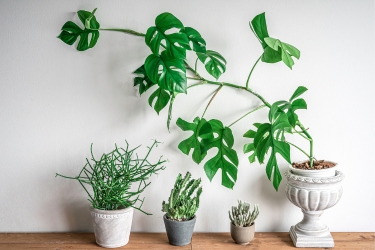
In small areas, vertical plants help save space. This means you can get gorgeous, vibrant greenery without sacrificing an entire wall to a garden center or dozens of pots. Many plants tend to grow outwards rather than upwards, which can make it difficult to find enough space for them, especially if you have only a few windows in your home and limited counter space.
Climbing plants add natural beauty and visual interest to your room, whether it's the bold leaves of Monstera Deliciosa trailing up a pole in your bedroom, or delicate Creeping Fig gracing the wall as a natural garland.
Adding climbing plants to your home is a great way to enjoy the benefits of nature indoors, including lower stress and a boost in mood, while still saving space and letting you enjoy your space as much as possible.
The Top Indoor Climbing Plants to Save Space
Ready to get growing? This list of the best indoor climbing plants for small homes includes a wide variety of styles, different levels of care, and recommendations for indoor cultivation, so you can tend to a garden that's fit for your lifestyle, right down to the smallest detail.
Golden Pothos (Epipremnum aureum)
The golden pothos plant is a common houseplant that thrives with bright, indirect light and only needs watering when the soil is completely dry. It's a hardy indoor climbing plant that can reach between 6 and 10 feet tall in the right conditions. Use moss poles or trellises to control the direction and height of its growth.
Notably, golden pothos leaves can double or triple in size as they climb. Make sure to use at least 3- or 5-foot poles, as these give the plant plenty of space to use its aerial roots; many tropical plants have aerial roots, which allow them to climb and draw nutrients from the air.
The golden pothos is toxic to pets, so it should be kept out of reach of any pets in the home. It also poses a mild risk to humans if ingested, and some people may develop a rash if they come into contact with the sap.
Mini Monstera (Rhaphidophora tetrasperma)
If you love the look of a monster deliciousa but want a more compact plant, the mini monstera is your answer. It's one of the best indoor climbing plants for small homes and apartments, thanks to its rapid growth, which adorns any space with its vibrant, fenestrated leaves.
Also known as a "Ginny," the mini monstera is a great beginner plant that doesn't require extensive care. Even inexperienced plant owners can find this a satisfying plant to care for.
The mini monstera is safe for humans and pets, so you can confidently place it anywhere you see fit without worrying about cats or dogs nibbling the leaves.
English Ivy (Hedera helix)
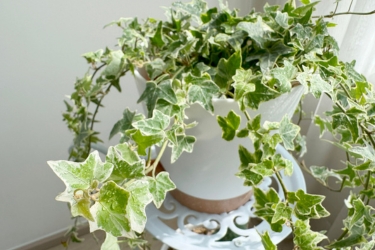
English ivy is one of the best plants for bedrooms because it thrives in dim lighting. This robust plant is hardy and adaptable, with charming evergreen leaves on fast-growing vines. If you're looking to add a whimsical, cottage-inspired look to your home's interior, the classic weaving vines of the ivy plant won't disappoint.
It's important to note that, while beautiful, English ivy is toxic if ingested, so it's best kept out of reach of pets and children.
Wax Plant (Hoya carnosa)
The waxy leaves of the Hoya carnosa, or aptly named wax plant, make it an appealing addition to kitchens, bathrooms, and bright living spaces. It can grow well in pots or hanging baskets and enjoys plenty of room to spread its trailing leaves.
When it comes to care, the wax plant is highly durable and needs infrequent watering when the soil is completely dry. An airy, granular potting mix, like one made for cacti and succulents, is best for ensuring good drainage and preventing root rot.
If you're looking for a good bathroom plant, the wax plant thrives in high humidity. To encourage blooming, avoid pruning and keep the plant in a dry, cool place. The wax plant prefers to stay in one spot, so find a good location and keep it there for as long as possible.
Other Suggestions
It would be impossible to cover all of the best indoor climbing plants, but here are some of the most common in addition to the types we've covered:
- Heartleaf Philodendron (Philodendron hederaceum)
- Satin Pothos (Scindapsus pictus):
- Creeping Fig (Ficus pumila)
- Swiss Cheese Plant (Monstera deliciosa)
- Cebu Blue Pothos (Epipremnum pinnatum 'Cebu Blue')
- String of Hearts (Ceropegia woodii)
Understanding Climbing Plants
Climbing plants can be divided into two types: bines and vines. Bines have tough stems that they use to wrap around objects, providing support. Meanwhile, vines use tendrils or specialized stems to hold themselves upright.
You can tell the difference by the stem structure; a bine climbing plant twists its entire body around the object it's growing on, while vines twist using special attachments, like suckers or aerial roots.
Most indoor houseplants are vines, as bines typically form larger structures and grow outdoors. If you do happen to take on an indoor bine plant, like honeysuckle or morning glories, they'll need intense sunlight and regular pruning.
How to Support Climbing Houseplants
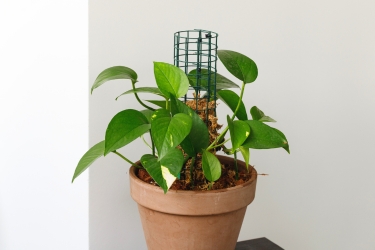
You can use a trellis, moss pole, bamboo stake, or coco coir poles. There are many options in different materials that allow you to create the ideal growth conditions for your new plants.
If you choose a species that uses aerial roots, then consider moss poles, as they offer a good surface for grip and plenty of moisture.
Metal or acrylic trellises can be great for a variety of other climbing plants, and the various styles available make it easy to customize the look of your arrangement. There are also wall-mounted trellises that can be eye-catching statement pieces, especially if you get a fast-growing climbing plant that wraps itself around the structure.
Do Climbing Houseplants Produce Flowers?
Many types of indoor climbing plants can produce flowers! Varieties of the wax plant (Hoya caronsa, the lipstick plant (Aeschynanthus radicans), jasmine (Jasminum polyanthum), and Swedish ivy (Plectranthus verticillatus) are flowering plants that can produce beautiful blooms.
Give Your Home the 5-star Treatment
Now that you know some of the best indoor climbing plants for small homes and apartments, you're ready to start investing in some plants that add natural beauty to your space. This can also be the prime time to explore window upgrades that improve sunlight penetration, so your plants get the light they need to thrive.
If you'd like to explore more ways to improve your home in Los Angeles County, connect with a design specialistfrom Arcadia Sash & Door today!